The Hidden Logic of the Genome
I was born in Kisumu, Kenya, a small town beside Lake Victoria, renowned for its stunning sunsets and home to hippos and vibrant cichlid fish. Inspired by my teacher, I developed a fascination with living creatures, including malaria-spreading mosquitoes, but I had no role models to guide my future path. I travelled to the UK without a clear plan, attended two universities and spent time in Paris before arriving at Cambridge as a Ph.D. student under Robert Edwards, the pioneer of in vitro fertilisation (IVF) babies. There, working on mammalian development was exhilarating, and I became curious whether mammals could develop parthenogenetically (asexually) without a paternal genome. Unexpectedly, I discovered that in mammals, the paternal genome is essential for placental development, while the maternal genome supports foetal development; both are essential for normal development. These functional differences are not based on genetics, according to Mendel, but result from reversible epigenetic marks inherited from the parental germlines without changes to the genetic code. I named this phenomenon Genomic Imprinting, which mediates the balance between conflict and plasticity of parental genomes. This discovery marked the dawn of epigenetics research into mammalian development, evolution, and human diseases.
Azim Surani’s lecture is introduced by Anna Petherick, Associate Professor in Public Policy at the Blavatnik School of Government. The lecture is followed by a Q&A moderated by Professor Dame Amanda Fisher, Whitley Chair of Biochemistry at the Department of Biochemistry, University of Oxford.
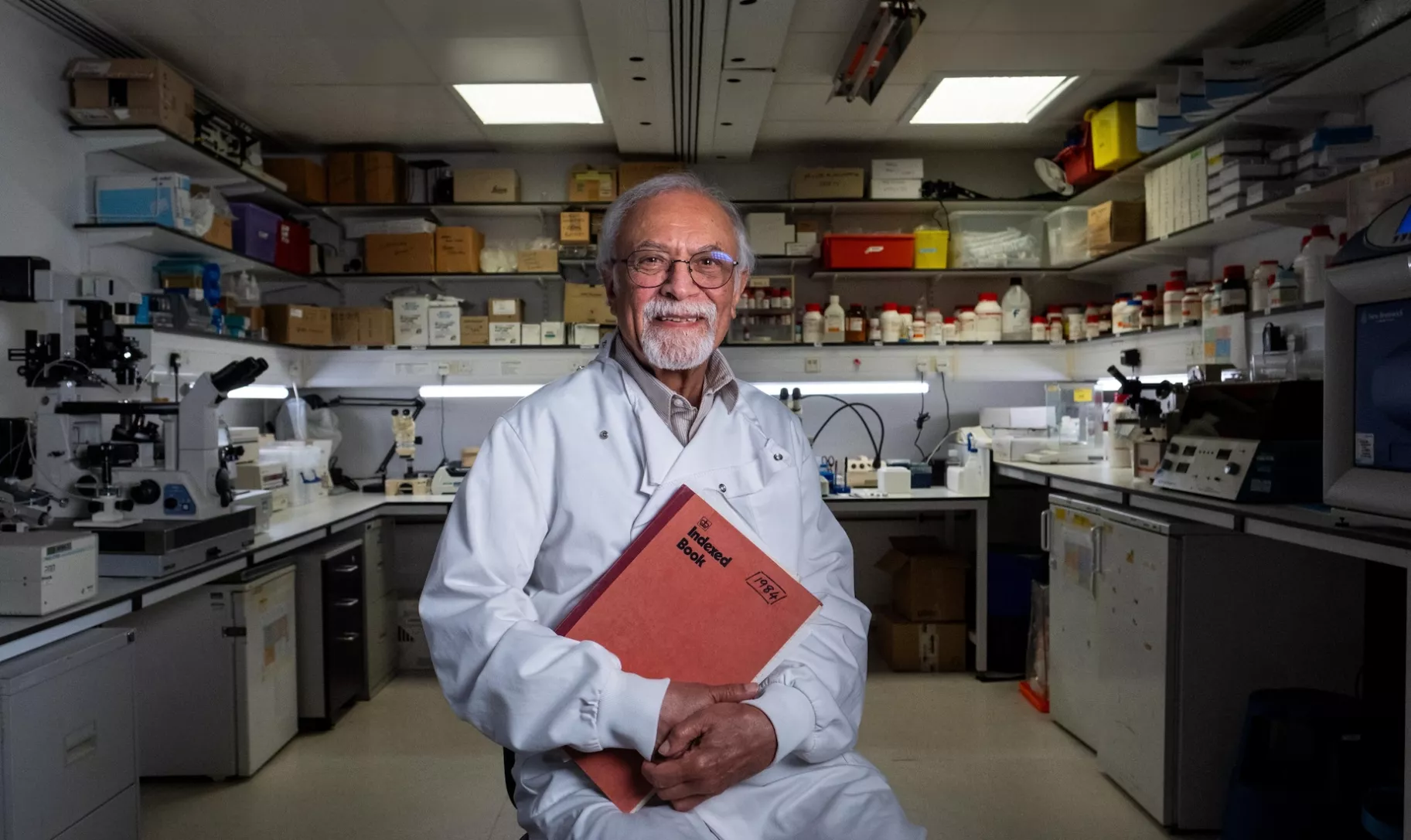
Azim Surani is the 2025 Kyoto Prize Laureate in Basic Sciences. He demonstrated that both paternal and maternal genomes are indispensable for normal mammalian development and subsequently discovered genomic imprinting that confers specific modifications and complementary functions to each genome. Furthermore, he has played a pioneering role in elucidating its underlying mechanisms, thereby making contributions to foundational scientific insights across a broad spectrum of life science fields.